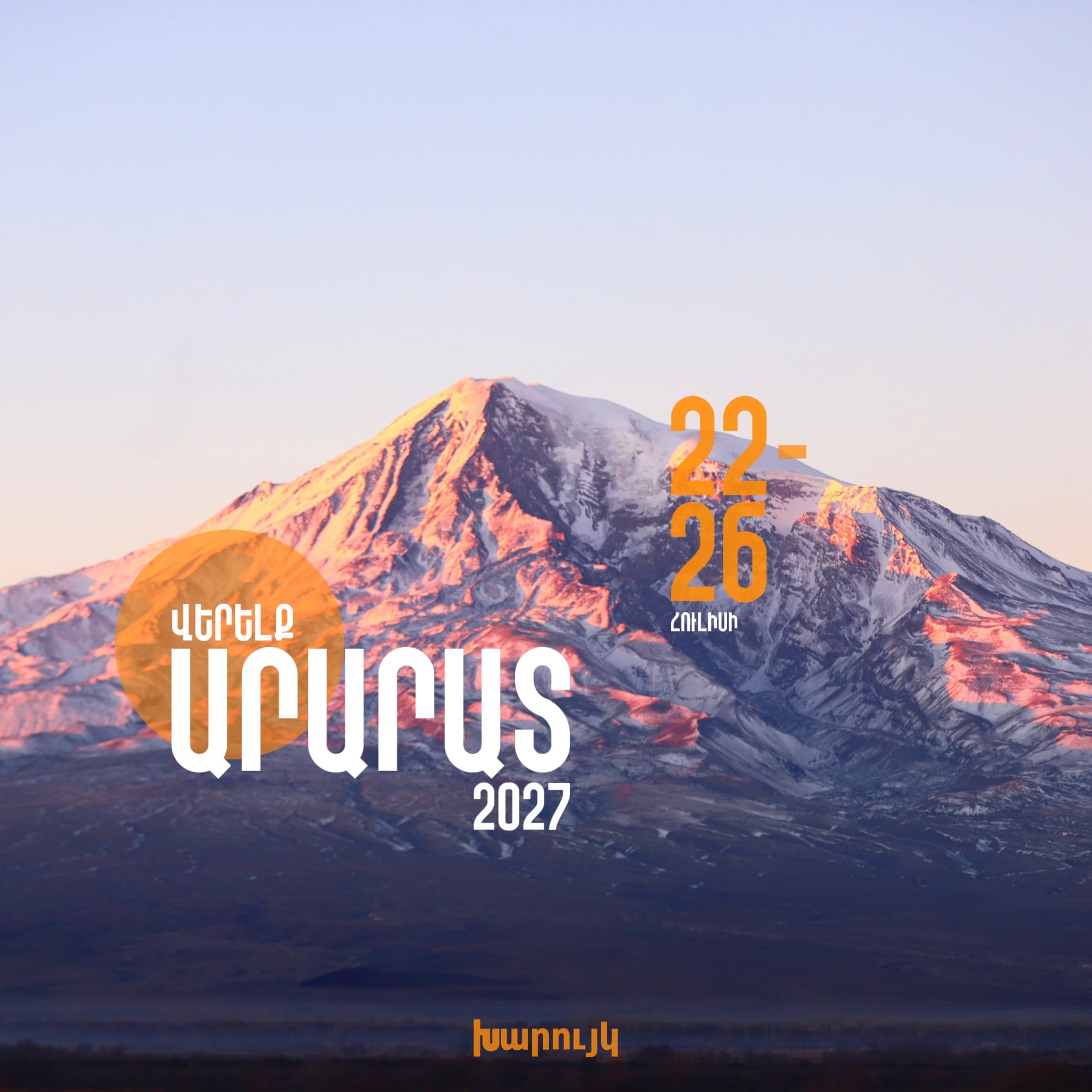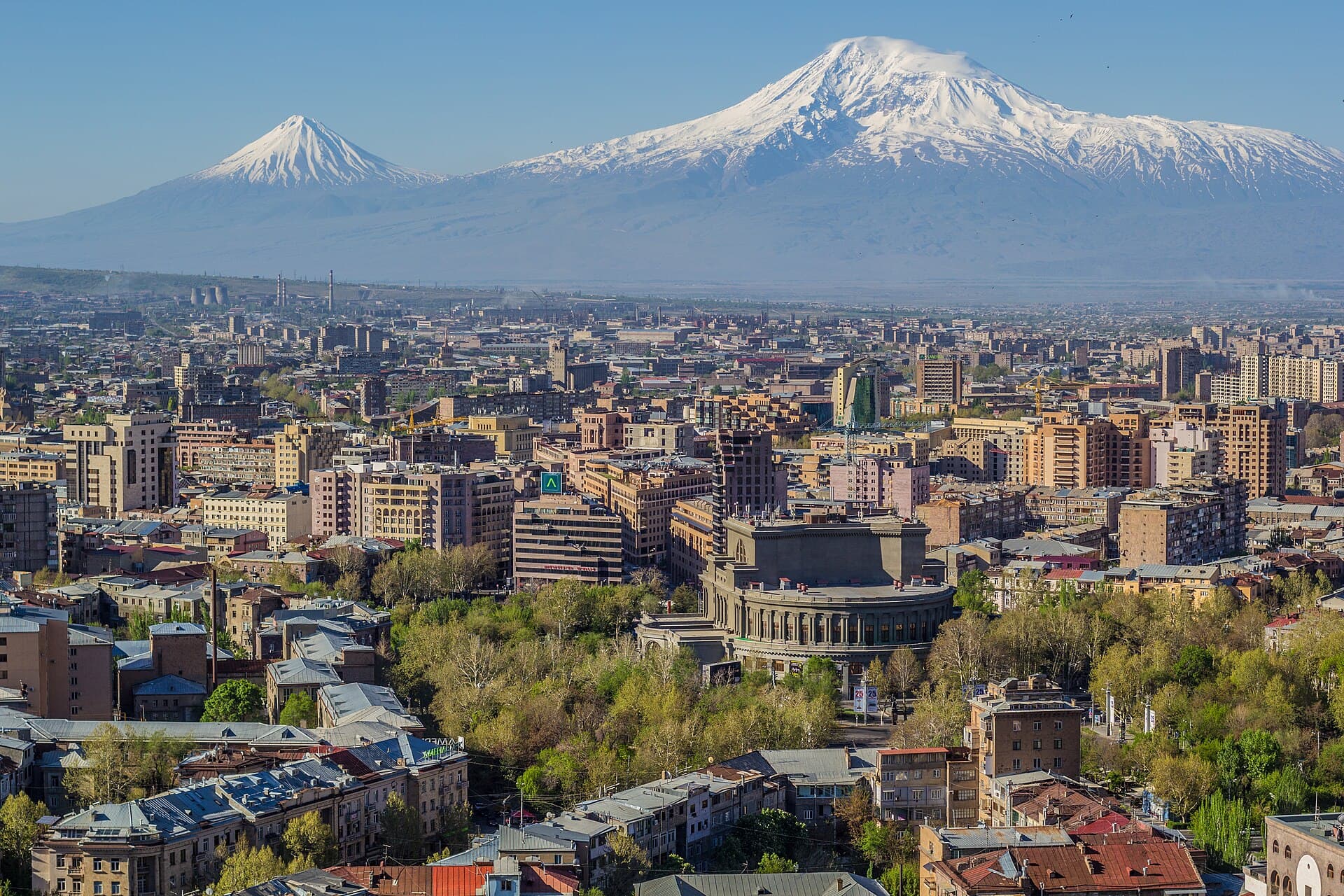
Rising above the Ararat plain, Mount Ararat — Masis in Armenian — is the image of Armenia itself. On a clear morning it fills the horizon of Yerevan, white even in August, and with Noah's Ark on its summit it stands at the centre of the national coat of arms. Since 1921 the mountain has been on the other side of the border, in eastern Türkiye, but for Armenians it has never stopped being home.
Two volcanoes, one massif
Ararat is a dormant volcano with two cones. Greater Ararat, or Masis, reaches 5,165 m by the traditional figure — recent surveys put it closer to 5,137 m, and its ice cap is slowly melting. Lesser Ararat, called Sis in Armenian, is an almost perfect cone of 3,896 m. The two summits are about 13 km apart, joined by a saddle at roughly 2,600 m.
The mountain's last eruption, on 2 July 1840, came with a powerful earthquake. The landslide that followed buried the village of Akori and the monastery of St. Hakob on the northern slope. Today the summit is covered by a permanent ice cap, though it has lost nearly a third of its area since the 1970s.
Legends and history
Armenian tradition has long linked the mountain with the biblical story of the Flood: it is said that Noah's Ark came to rest on its slopes. Another legend tells of two sisters, Masis and Aragats, who quarrelled and were parted forever — which is why the two mountains still look at each other across the Ararat valley.
The first recorded ascent took place on 9 October 1829. The party was led by the German naturalist Friedrich Parrot and the Armenian writer Khachatur Abovian, then a deacon at Etchmiadzin, together with two Russian soldiers and two villagers from Akori. They set up a wooden cross on the summit.
How the climb works today
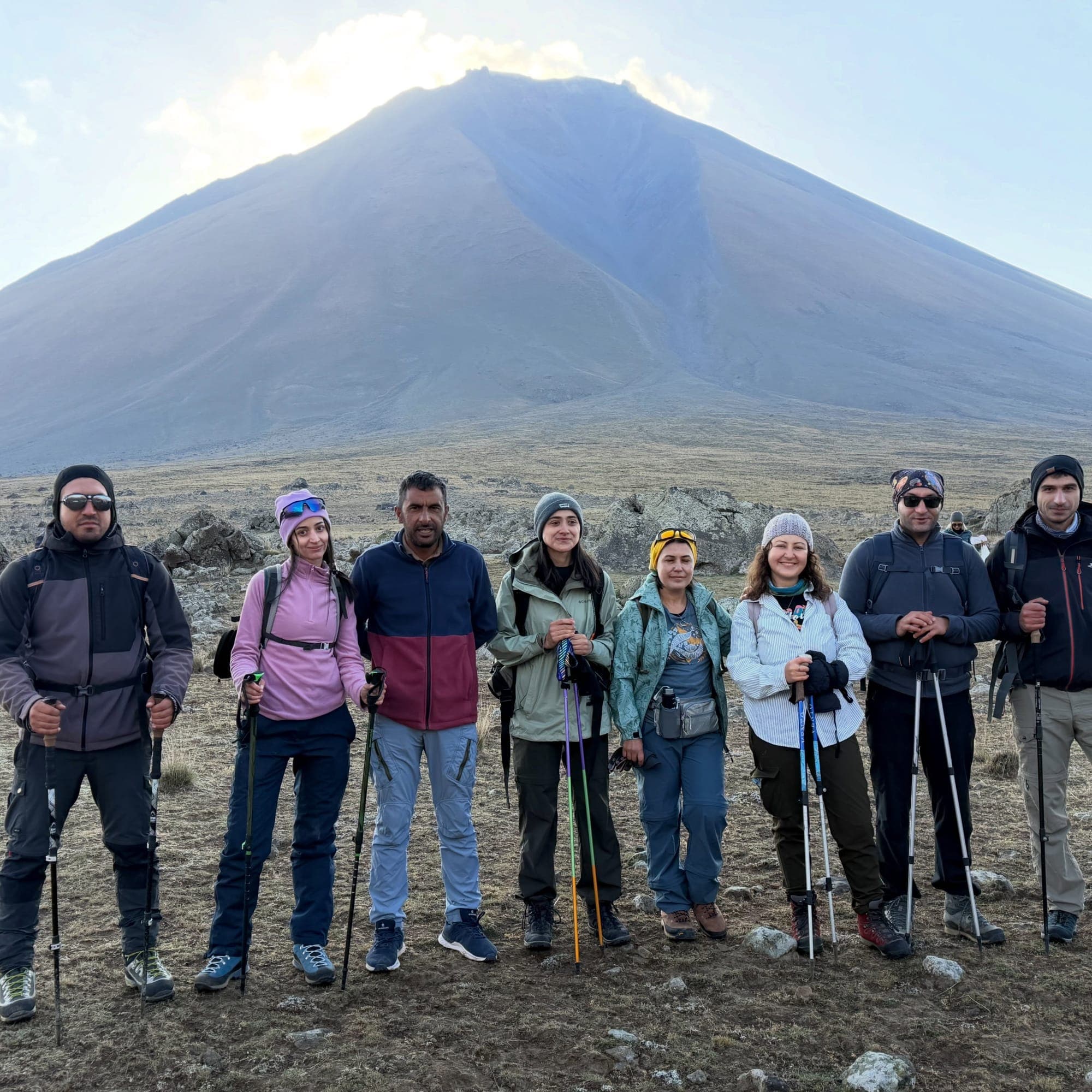
Today the mountain is climbed from the south, near the town of Doğubayazıt. The standard route starts above the village of Eli and goes through two camps: the first at about 3,200 m on grassy slopes, the second at about 4,200 m among rocks and scree. Summit day begins long before dawn — several hours up steep scree, then the ice cap, where crampons are needed — to reach the top around sunrise.
The route is not technical, but the altitude makes it serious: above 5,000 m the air holds only about half the oxygen it does at sea level, and the weather near the top can change fast. Good acclimatization — a night at each camp and an acclimatization walk — is what gets people to the summit. A permit from the Turkish authorities is required and must be arranged in advance; the usual season runs from July to early September.
Climb it with Kharuyk
Every summer we climb Ararat with 5-, 6- and 7-day programs, and we also run a shorter climb of Lesser Ararat (Sis). Write to us for the full program, the dates and the price — the earlier you book, the better.
Photos
Photos: Serouj Ourishian (CC BY-SA 3.0), Diego Delso (CC BY-SA 4.0), ender gürel (CC BY-SA 4.0), Safa.daneshvar (CC BY-SA 4.0) — via Wikimedia Commons